


Article
EDC System: The Tools and Philosophy of Everyday Carry
A practical guide to building an everyday carry system for preparedness, resilience, and real-world problem solving.
You are three miles from home when the power grid in your district flickers and dies.
It’s 5:30 PM in mid-November. The sun is already down. The temperature is dropping.
A minor traffic accident has bottlenecked the main route out of the city.
What should have been a routine commute suddenly becomes a test of friction.
Do you have a way to see in the dark?
Can you signal your location?
Can you navigate a secondary route if your phone battery dies?
This is where preparedness moves from theory to reality.
It doesn’t start with a bunker in the woods.
It starts in your pockets.
This is the world of Everyday Carry (EDC).
What Is Everyday Carry (EDC)?
At its simplest level, Everyday Carry refers to the items you carry on your person every single day.
For the preparedness-minded individual, however, EDC is far more than a keychain and a wallet.
It is a deliberate system of tools designed to solve problems, reduce risk, and bridge the gap between an ordinary day and an unexpected disruption.
In the prepping world, a real EDC system is defined by three qualities:
- Utility
- Reliability
- Accessibility
It is the first layer in a broader preparedness strategy.
A bug-out bag is what you grab when you leave home.
Your EDC is what you already have when the emergency finds you first.
The EDC Mindset
The philosophy behind everyday carry is simple:
Carry the tools that solve the problems you are most likely to face.
Preparedness is often associated with large-scale disasters.
In reality, most disruptions are smaller and far more common:
- a dead battery
- a sudden blackout
- a loose screw
- a minor injury
- an unexpected delay
A multitool that fixes a broken hinge is just as much survival gear as a tourniquet.
Good EDC is about probability rather than fantasy.
You carry a lighter not because you expect to build a signal fire tonight, but because the ability to create flame is useful often enough to justify the space in your pocket.
Preparedness, in this sense, is simply reducing friction in daily life.
The Core Categories of an EDC System
A balanced EDC setup is not a pile of gadgets.
It is a toolkit built around function.
Each item fills a practical role.
Cutting Tool
A knife remains one of the most useful tools a person can carry.
A folding knife or compact fixed blade can handle tasks such as:
- opening packages
- cutting cordage
- preparing materials
- emergency seatbelt removal
Look for:
- one-hand deployment
- a secure locking mechanism
- durable blade steel
- a shape you can control safely
Light
A dedicated flashlight is one of the most valuable preparedness tools you can carry.
Unlike your phone light, a real flashlight:
- preserves your phone battery
- provides stronger illumination
- improves situational awareness
A good compact flashlight should be:
- bright enough for real use
- simple to operate
- durable
- easy to carry daily
Fire
Even in urban environments, fire still has practical value.
A simple BIC lighter provides:
- heat
- ignition
- emergency utility
- backup light
Few items offer so much usefulness for so little weight.
Communication
Your smartphone is your primary communication tool.
But a real system includes redundancy.
Useful additions include:
- a power bank
- a charging cable
- a card with emergency contact numbers
- offline maps
Preparedness means planning for the moment when technology fails.
Medical
You are far more likely to use a bandage than anything dramatic.
A minimal EDC medical setup might include:
- adhesive bandages
- antiseptic wipes
- gauze
- personal medication
If you carry bleeding-control equipment, take the time to learn how to use it properly.
Utility / Multitool
A multitool combines multiple tools into a compact form.
Most include:
- pliers
- screwdrivers
- scissors
- cutting tools
It is often the most useful item for unexpected repairs and practical tasks.
Personal Security
Depending on your laws, environment, and training, this category may include:
- pepper spray
- a personal alarm
- other lawful defensive tools
Security tools should always match your competence and local regulations.
Note-Taking
A small notebook and a reliable pen remain surprisingly valuable.
Paper does not need a battery.
It works under stress and in poor conditions.
You can use it to record:
- directions
- names
- times
- symptoms
- important details
Analog tools are often the most reliable.
Building a Practical EDC System
A practical EDC system should be filtered through five questions:
- Where do you live?
- What is legal?
- What will you actually carry?
- What will hold up over time?
- What do you know how to use?
Environment
Urban EDC often prioritizes:
- flashlights
- power banks
- compact multitools
- communication redundancy
Rural EDC may prioritize:
- navigation tools
- fire-starting tools
- larger blades
Match your gear to your real environment, not an imagined one.
Legal Restrictions
Know the laws regarding:
- knife blade length
- locking mechanisms
- pepper spray
- self-defense tools
A tool that creates legal trouble is not an asset.
Weight and Portability
If your setup is uncomfortable, you will eventually stop carrying it.
The best EDC system is the one that stays with you every day.
Reliability
Daily carry gear experiences constant friction.
Sweat, lint, impact, and repeated use all take their toll.
Choose tools that are built to last.
Skill Level
Simple tools used well beat advanced tools used poorly.
Build your kit around gear you understand and can use confidently.
Layered Carry (The Prepper’s Secret)
Preparedness works best in layers.
Each layer adds capability without overloading your pockets.
Layer 1 — On Body
These are the items that stay with you at all times:
- phone
- wallet
- keys
- flashlight
- knife
This is your baseline capability.
Layer 2 — EDC Bag
A small bag expands what you can carry without filling your pockets.
Common additions include:
- water bottle
- power bank
- compact medical kit
- gloves
- rain layer
- snacks
Layer 3 — Vehicle / Office
Your car or workplace can hold larger support items such as:
- spare clothing
- boots
- additional water
- larger first aid supplies
Layer 4 — Home
Your home is the deepest layer of preparedness.
This is where your larger supplies and systems live.
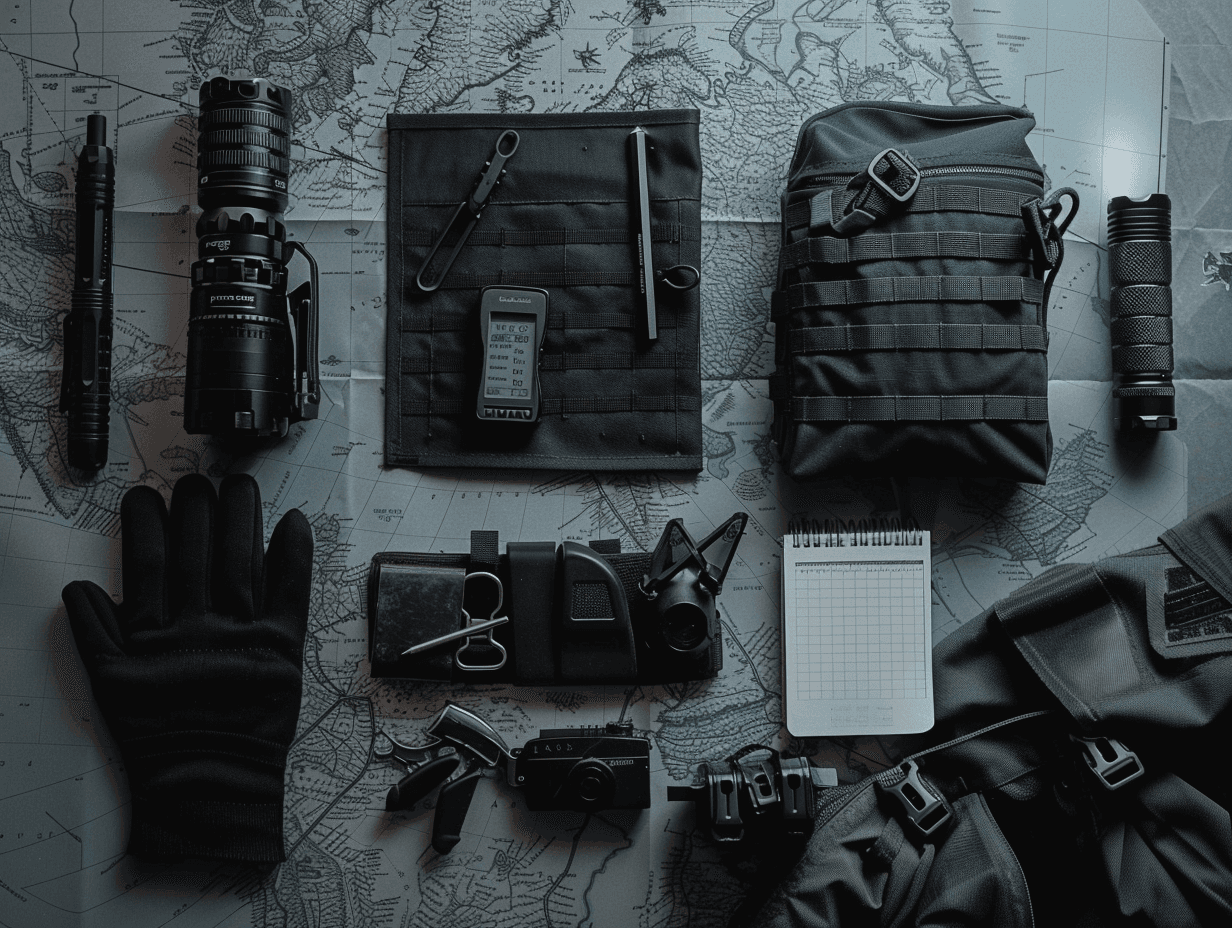
Example Practical EDC Setup
A balanced everyday carry setup might include:
Communication
- smartphone in a rugged case
- durable wristwatch
Tools
- compact multitool
- folding knife
- high-output flashlight
Problem Solvers
- BIC lighter
- marker
- charging cable
- backup battery
Safety
- pepper spray
- minimal first-aid items
Support Gear
- gloves
- notebook
- pen
The goal is capability without bulk.
Common EDC Mistakes
Carrying Too Much
Overloading your pockets creates discomfort.
A smaller system carried consistently is better than a larger one left at home.
Buying Gear Without Training
A tool only helps if you know how to use it.
Training multiplies the value of equipment.
Ignoring Maintenance
Knives dull.
Batteries die.
Gear wears out.
Audit your system regularly.
Choosing Style Over Utility
A flashy tool is not automatically a useful one.
Build your system around function first.
Training Matters More Than Gear
The most important part of your EDC system is not the gear.
It is your awareness, judgment, and skill.
Useful training includes:
- first aid
- bleeding control
- situational awareness
- navigation
- self-defense
- tool familiarity
In a crisis, gear supports skill.
It does not replace it.
Conclusion
Building an EDC system is not about buying more equipment.
It is about carrying practical tools that make you more capable in everyday life and more resilient when things go wrong.
Start simple.
Carry:
- a light
- a cutting tool
- a way to communicate
- basic support items
Then refine your system over time based on real experience.
Preparedness is not a destination.
It is a habit of quiet readiness carried every day.
So ask yourself one simple question:
What’s in your pockets right now?